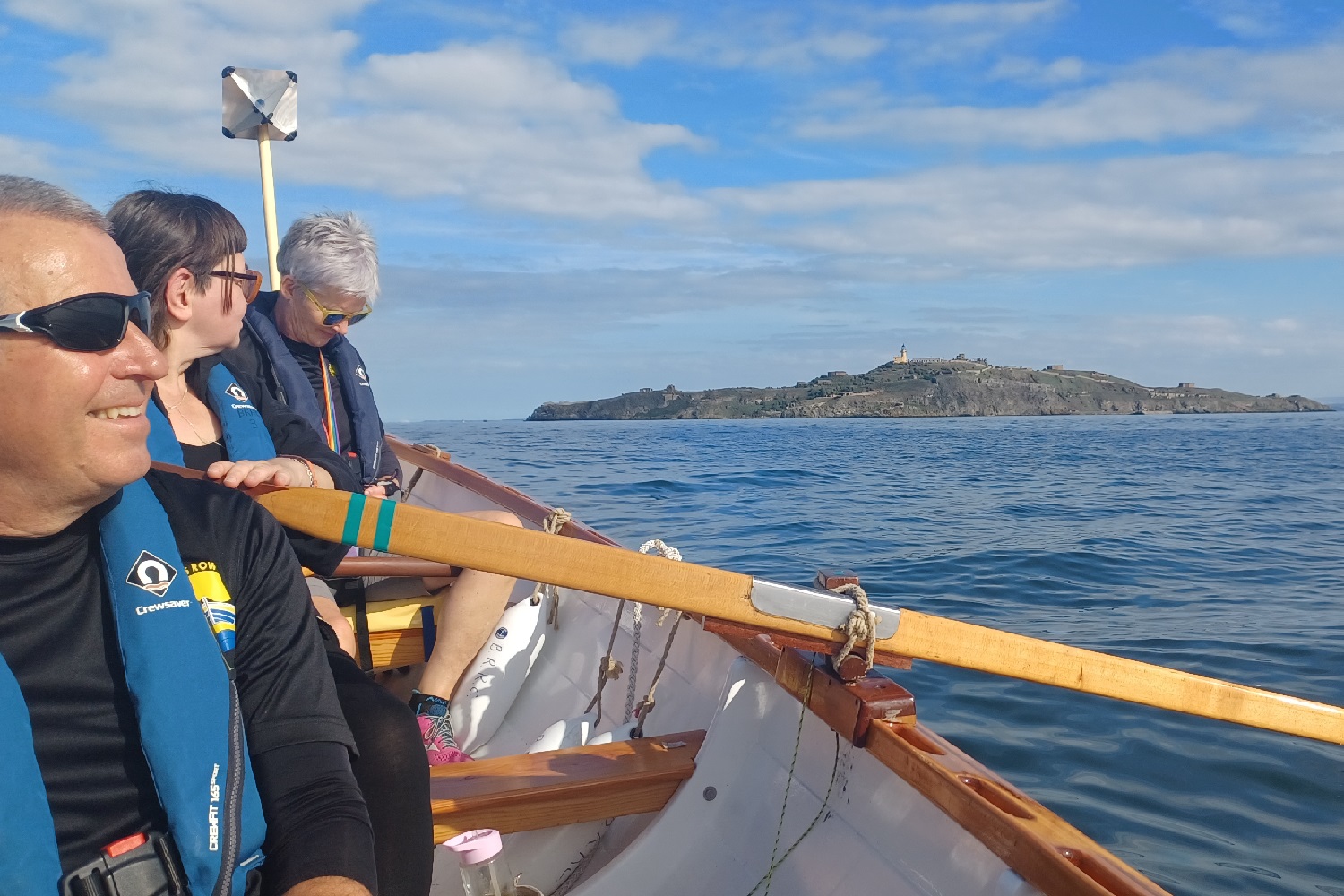
On Sunday 13th September the wind of the previous few days finally subsided and we took the opportunity to enjoy a wee ‘excursion’ row to Inchkeith. Maria, Karen and Douglas – led by Chris and Finlay who had done all the necessary passage planning – set out early in the afternoon on the 4-mile row from Burntisland to the island.
Conditions were excellent and the crew made good progress – first to a shipping channel buoy that marked our halfway point, and then on to the west side of Inchkeith. Here Chris’s local knowledge was invaluable as we passed Seal Carr (which was inhabited solely by cormorants) before heading into the small harbour. High tide meant the many ‘tricky’ rocks were covered – but Chris took us carefully in to tie up at the sea wall.
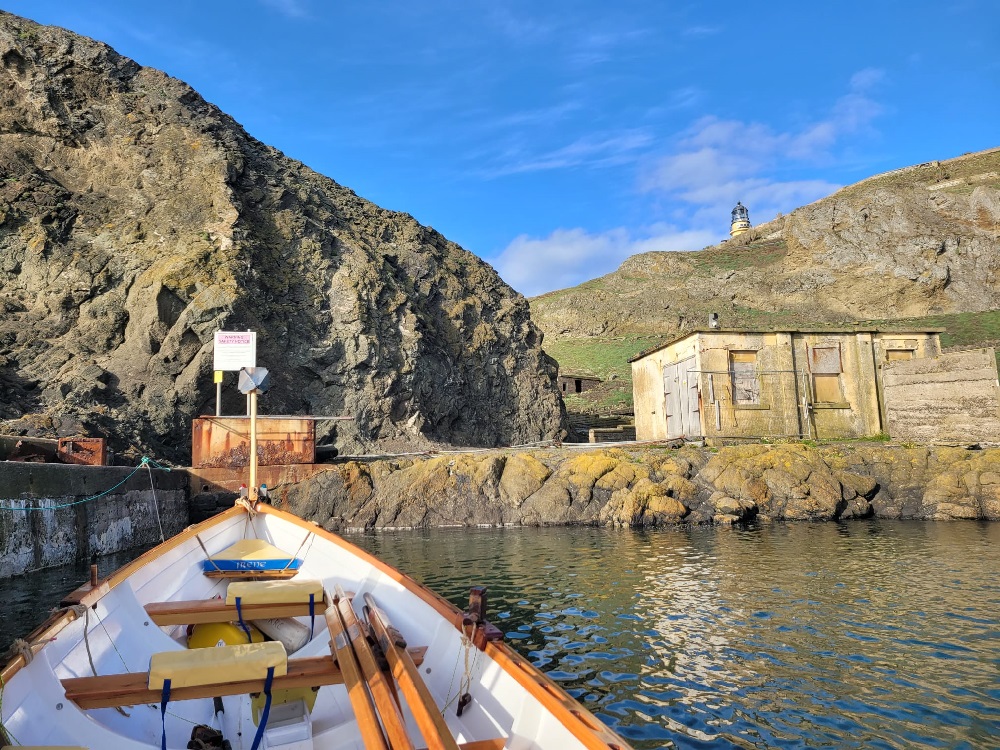
Inchkeith Harbour
We then walked up to the lighthouse through what can only be described as a desolate post-apocalyptic landscape seemingly covered in bleached rabbit bones. The lighthouse itself is, of course, well maintained – but everything else that related to wartime defences, when it was home to over 1,000 troops, was just in ruins. It really did feel quite eerie – broken doors and windows, old chairs and tables, rusting old bedsteads, an overgrown drying green alongside what appeared to have once been a small orchard – all kind of surreal. It really seemed hard to believe that an island so close to Edinburgh and the busy Fife coast could feel so totally isolated.
A short panoramic video from the top of the island
Chris and Finlay had obviously done a little research and were able to give us a little more of the island’s history. Quite apart from its ‘recent’ wartime history, it has been home to Stevenson’s lighthouse since 1786. It has been a quarantine island, as well as the site of a language experiment in 1493 when King James IV placed two infant children there along with a mute nanny to see if they would naturally speak Hebrew – astonishingly they didn’t! Further research since then suggests Inchkeith’s story goes back a whole lot further to Pictish times and beyond. It is well worth a look.
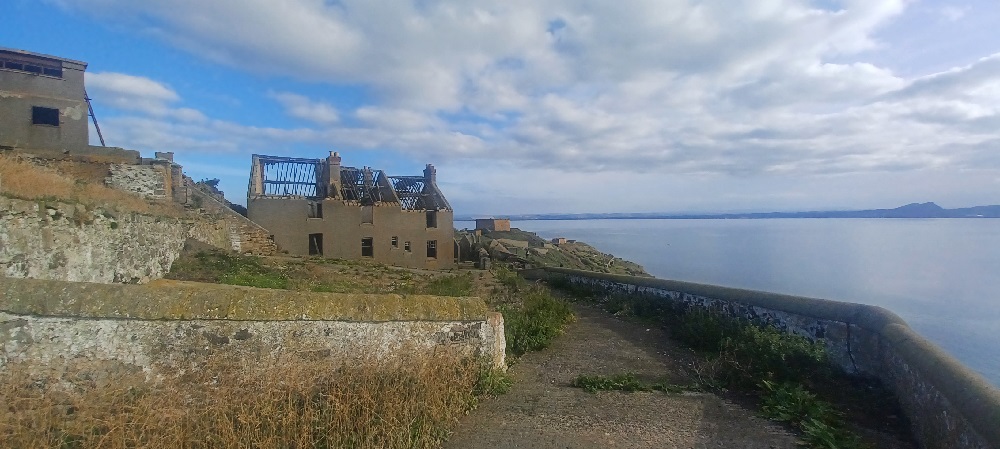
Ruined buildings, looking south towards Edinburgh
We spent about an hour ashore before we headed back home. As well as being a wonderful row, it was also an absolutely fascinating afternoon. It is somewhere we will definitely return to as a club – and I would thoroughly recommend it.
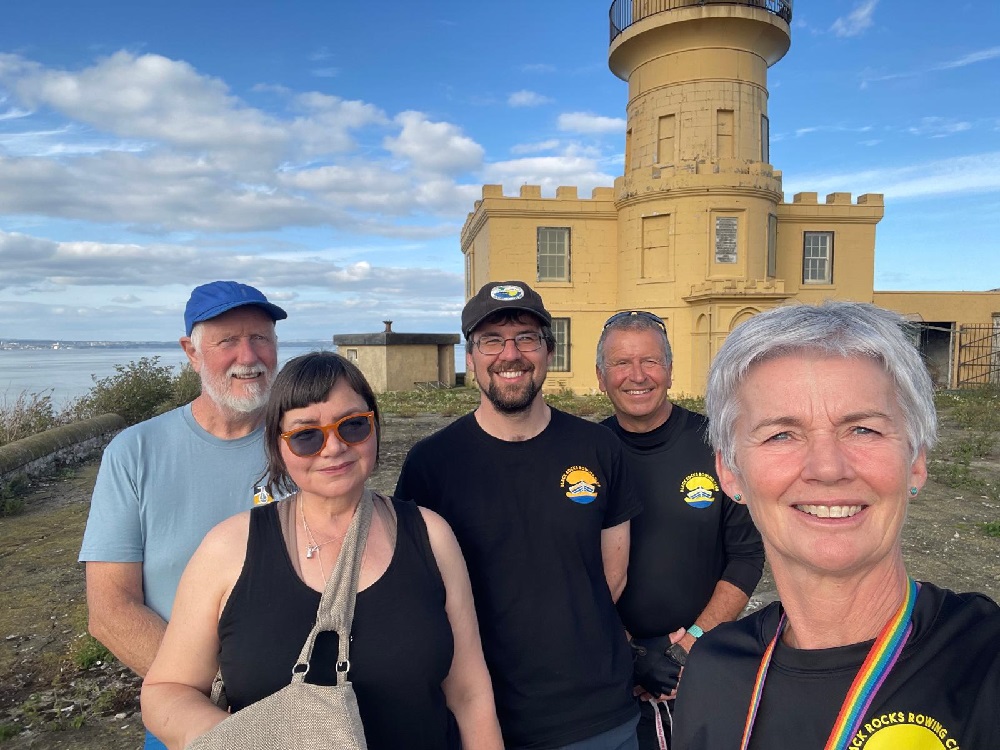
The crew, with Inchkeith Lighthouse behind
Report by Douglas Young


